
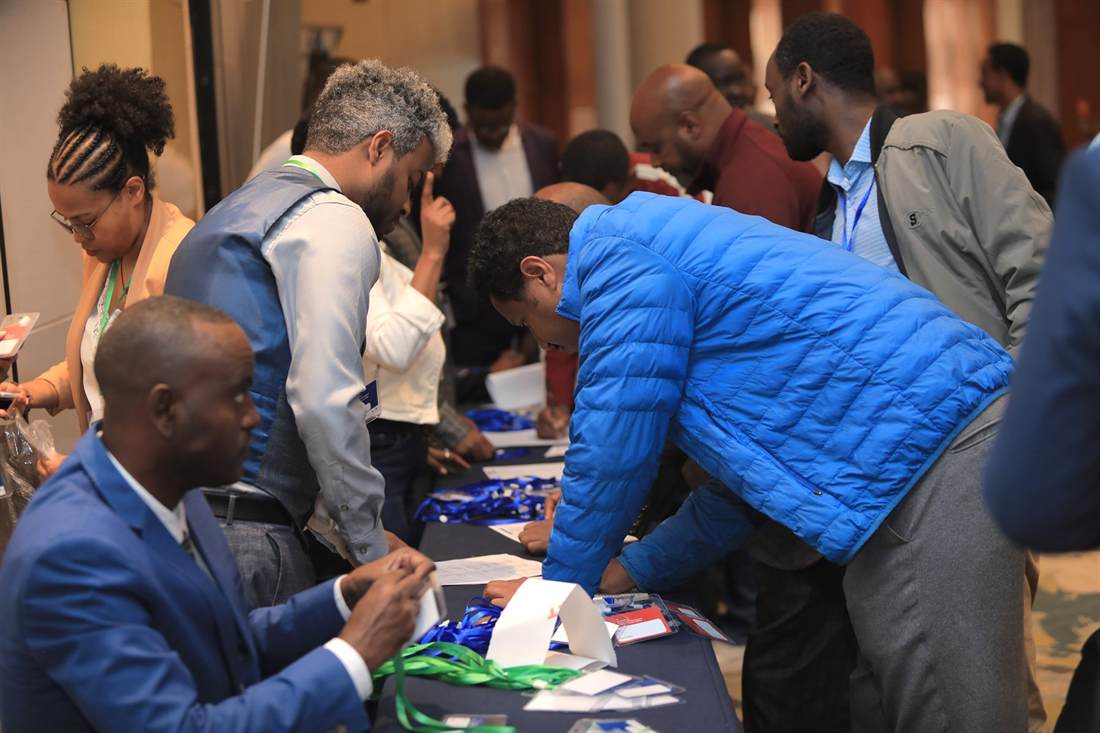
Organizers can spend weeks perfecting an event: the speakers, protocol, venue, agenda, branding, and logistics. On the day, the sessions run on time, the stage looks right, and the photographs are strong. By the usual measures, the event is a success.
But a harder question remains: did the event capture what the room knew?
That question matters because the audience is rarely just an audience. In a policy dialogue, conference, town hall, consultation, or learning event, participants arrive with field experience, dissenting views, practical questions, and knowledge that may not exist anywhere else in the room. Yet most of that intelligence is still filtered through a few raised hands, a rushed Q&A, informal corridor conversations, or a feedback form opened after attention has already moved on.
The loss is not only about inclusion. It affects the quality of moderation, the accuracy of documentation, the priorities organizers take forward, and the decisions that follow.
We have confused a smooth event with a useful one
A smooth event is valuable. It protects the organizer's reputation, respects participants' time, and creates the conditions for serious exchange. But operational success is not the same as intellectual or strategic value.
Attendance shows who entered the room. Applause shows a moment of approval. Social-media reach shows visibility. A satisfaction score shows how people felt about selected elements. None of these, by itself, tells us what participants understood, questioned, resisted, prioritized, or were prepared to support.
When we treat logistics as the output, the meeting ends when the closing remarks finish. When we treat the room as a source of intelligence, the event becomes part of a longer chain: inquiry, dialogue, sense-making, decision, and follow-through.
Engagement is not the same as intelligence
This distinction is uncomfortable because the events industry has become good at displaying engagement. We can launch a poll, project a word cloud, collect questions through a QR code, or report how many people interacted. These activities can energize a room. They can also create the appearance of participation without changing anything important.
A digital tool does not solve weak participation design. If the question is vague, the response window is badly timed, the moderator cannot interpret the signal, or nobody owns the follow-up, more technology simply produces more disconnected data.
Event intelligence begins one step earlier. It asks: what does the organizer genuinely need to understand from this group, and what will be done differently because we understand it?
An event should operate as a temporary intelligence system
This does not mean turning every gathering into a research exercise. It means giving participation a purpose and a route into the event's decisions. In practice, a useful event-intelligence system performs four connected jobs.
1. It defines the signal before collecting the data
The team identifies what it needs to hear: unresolved questions, implementation barriers, competing priorities, emotional temperature, areas of agreement, or commitments for follow-up. Without this focus, the room generates volume rather than insight.
2. It creates more than one path to contribute
The microphone will always favour a small group: those who are confident, quick, senior, or comfortable speaking publicly. Serious participation gives quieter, more reflective, and more cautious participants a legitimate route into the conversation without forcing everyone to behave in the same way.
3. It interprets input while the room is still alive
The value of live input is not only that it can appear in a report later. Repeated questions can reshape a panel. A split in opinion can trigger a clarifying poll. A concern that is growing across several comments can be acknowledged before the session moves on. Intelligence is most useful when it can still improve the event that produced it.
4. It preserves a disciplined record for follow-through
Participant input should not be copied into a report as if every comment carries equal weight or represents the whole room. It needs cleaning, clustering, context, and honest qualification. Directional evidence is useful when it is labelled as directional. It becomes dangerous when a small or self-selected response is presented as consensus.
What early field use has taught us
At Changing Images, we have been testing this approach through Censers, our early-stage event-intelligence and digital audience-moderation platform. The most useful learning has not been that technology can make events interactive. We already knew that. The deeper lesson is that technology quickly exposes the quality of the facilitation design around it.
Clear, problem-focused prompts outperform broad invitations
'Any comments?' produces scattered contributions. A focused question tied to the purpose of the session produces material a moderator can use. The wording of the prompt is part of the facilitation, not a technical setting delegated at the last minute.
Timing is part of meaning
A thoughtful question launched late, left open briefly, or introduced without explanation will underperform. That does not necessarily mean participants have nothing to say. It may mean the participation design failed to give them a fair opportunity to say it.
Fewer strategic prompts are often better
Collecting everything can feel ambitious, but it burdens participants and overwhelms moderators. A small number of well-chosen questions, positioned at meaningful transitions in the agenda, usually produces stronger evidence than a continuous stream of generic engagement requests.
The stage needs interpretation, not another dashboard
The facilitator should not be forced to scan raw comments while introducing speakers, managing time, and protecting the flow of the room. The better model separates roles: participants contribute; an online moderator reviews and organizes input; the stage receives only the most relevant theme, representative question, poll signal, or instruction.
Human judgement remains non-negotiable
AI can help draft themes, suggest neutral polls, and synthesize patterns. It should not decide what the room believes or send unreviewed conclusions to the stage. Context, sensitivity, representativeness, and consequences still require human moderation.
Where Censers fits
Censers is being developed as a parallel intelligence layer alongside the live event. Participants can use an event-specific room to submit questions or comments, help prioritize what matters, and respond to focused polls. The moderator can review contributions, manage visibility, generate draft themes, prepare poll bundles, and send stage-safe cues. The facilitator sees only what has been selected for use. Afterward, the event team can export the session evidence for analysis and reporting.
The point is not to automate facilitation. It is to give good facilitators a wider field of view and to help organizers retain more of the value their participants brought into the room.
Censers is still early-stage and is currently offered through selected guided engagements. That matters. We are learning that the strongest results come when the intelligence objective, prompts, roles, consent language, stage integration, and reporting needs are designed before the event—not improvised once the room is already full.
A better standard for serious events
Before approving another engagement tool or adding another feedback form, organizers should be able to answer seven questions.
1. What should this room help us understand?
Name the decision, uncertainty, barrier, priority, or learning question that participant input should illuminate.
2. Whose knowledge is most likely to remain unheard?
Identify the people who may be less able or willing to compete for the microphone, and design a credible route for their contribution.
3. What input can improve the live conversation?
Decide which signals should reach the moderator or panel while the event is still unfolding, and who is responsible for interpreting them.
4. What will remain private, moderated, or visible?
Set the participation rules, consent language, and moderation thresholds before asking people to contribute.
5. What does the evidence actually represent?
Distinguish full-room participation from self-selected responses, and distinguish repeated views from representative conclusions.
6. Where will the insight go after the event?
Connect participant input to the report, decision note, action plan, future agenda, or responsible owner rather than leaving it in an export file.
7. What will participants see happen because they contributed?
Close the loop. People are more likely to engage seriously when they can see that their questions were acknowledged and that their input has a route to action.
The room should not be a temporary asset
Events bring together knowledge that would otherwise be expensive, slow, or impossible to assemble. Treating that concentration of experience as background scenery is wasteful. Treating it as intelligence requires more than a platform: it requires clear purpose, facilitation discipline, human judgement, and ownership after the applause.
The next generation of successful events will not be judged only by whether the room was full, the program ran on time, or the audience was active. They will be judged by whether the event helped people listen better, decide more clearly, and carry more of the room's knowledge into what happens next.
The event is not the output. What the room helps us understand—and what we do with that understanding—is.