The easiest event results to count are rarely the most important.
We can count registrations, attendance, speakers, sessions, social media posts and completed feedback forms. These numbers are useful, but they mostly tell us whether the event was delivered. They do not necessarily tell us whether the event worked.
A room may be full because the venue was attractive, the invitations were broad or attendance was expected. Participants may rate the event positively because the food was good, the speakers were respected and the programme finished without a visible crisis. None of that proves that the gathering created the change that made it necessary.
At Changing Images, we have become more interested in three harder questions: Were the right stakeholders present? Did participants learn or reconsider something? Was the result used after the event?
Delivery is not the same as success
Good delivery matters. Registration should be organised. Speakers should be prepared. Time should be managed. Participants should understand what is happening. A poorly delivered event can damage trust and prevent any useful outcome.
But delivery indicators are supporting evidence, not the final verdict. An event can run beautifully and still avoid the issue it was created to address. It can also experience delays or technical problems and still generate an important decision, a new understanding or a commitment that changes what happens next.
This distinction is uncomfortable because delivery is easier to observe. Outcomes require us to define what should be different and then look honestly for evidence of that difference.
First test: were the right stakeholders present?
There is a difference between a large audience and the right room.
If the purpose is to make a decision, the people with authority must be present. If the purpose is consultation, the people affected by the issue must have a meaningful place. If the purpose is coordination, the institutions that depend on one another cannot all send observers who are unable to commit.
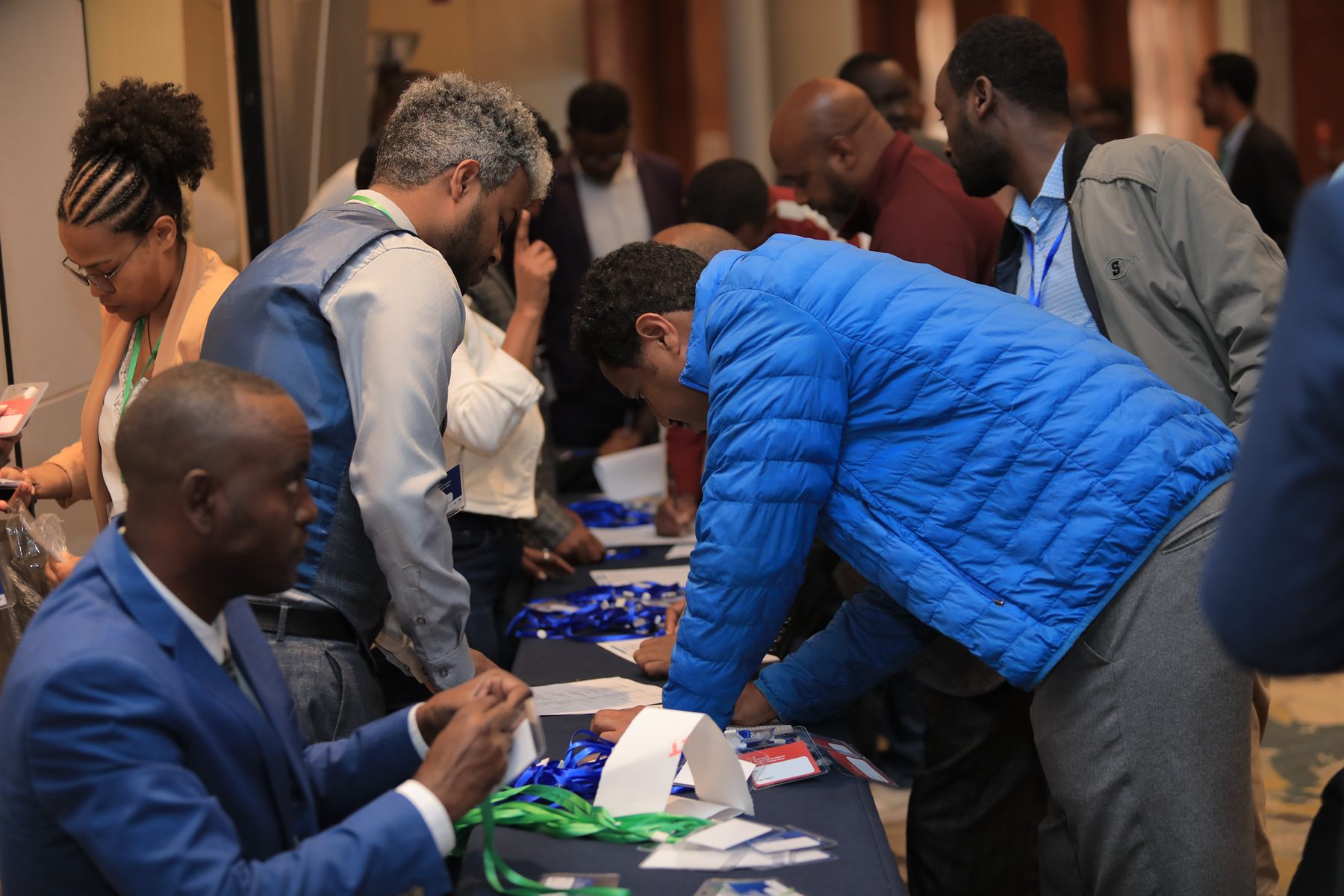
The registration-to-attendance gap matters, especially when organizers have planned for a much larger group. But the more important question is who was missing. Twenty relevant stakeholders may produce more value than two hundred participants who cannot influence, implement or legitimately represent the issue under discussion.
This is why measurement begins before invitations are issued. The participant list should be treated as part of the event design, not as an administrative task. Organizers need to identify whose knowledge, authority, experience and ownership are required for the purpose to be credible.
Second test: did participants learn or reconsider something?
Adults do not arrive in a room empty. They bring experience, positions, concerns and opinions. Participant engagement is therefore not an optional decoration added between presentations. People are more likely to open their minds when they believe their own perspectives have been heard and taken seriously.
Learning does not always mean acquiring new technical information. A participant may understand another stakeholder's constraint for the first time. A team may discover that its priorities are not shared. A policy discussion may reveal that an apparently simple implementation problem has several competing causes. A leader may reconsider the feasibility of a preferred solution.
These shifts can be observed through more than a satisfaction question. Organizers can compare expectations at the beginning with reflections at the end. They can listen for changes in the questions participants ask. They can capture points of convergence and disagreement, test priorities before and after discussion, or ask participants what they would now do differently.
Not every shift will be measurable in a single day, and we should not manufacture evidence. But if the event intended to create learning and nobody can identify what became clearer, what was questioned or what changed, the programme may have delivered content without creating understanding.
Third test: was the result used afterward?
The strongest evidence often appears after the chairs have been stacked and the banners removed.
Did the discussion inform the next programme design? Did a team return to the decisions when planning its next engagement? Did stakeholders receive a clear record of commitments? Did the communications and knowledge team have accurate material from which to create useful content? Were unresolved issues carried into the next conversation rather than forgotten and rediscovered?
A meeting should leave behind more than memories. Depending on its purpose, that may include a decision note, an action matrix, a set of priorities, an agreed message, a record of divergent views, a learning brief or a stronger question for the next stage of work.
Use is a demanding measure because it exposes ceremonial outputs. A report can be beautifully designed and never opened. An action plan can contain many activities but no owners or deadlines. Recommendations can be applauded without entering anyone's workplan. The existence of an output is not the same as the use of an output.
Design the evidence before the event
Measurement should not begin with a feedback form drafted during the closing session. The event team should agree on a small set of success questions while the purpose and agenda are still being designed.
Before the event, define the stakeholders whose presence matters and the change the event is expected to make possible. During the event, capture participation, questions, shifts in understanding, decisions, disagreements and commitments. After the event, check whether the agreed outputs reached the right people and whether they were used in the next decision, programme or engagement.
This does not require a complicated evaluation system for every meeting. It requires discipline about what evidence is worth collecting. A short stakeholder dialogue may need only three measures. A regional conference may require several layers of evidence. The method should be proportional to the purpose.
A practical success test
Before approving the agenda, organizers should be able to answer five questions.
Who must be present for this event to be legitimate and useful? What do participants need to understand, question or reconsider? What decision, commitment or output should exist when the event closes? Who will use that output, and for what? When will we check whether it was used?
If those questions cannot be answered, adding another poll or feedback form will not solve the problem. Measurement cannot rescue an event whose purpose is unclear.
The honest limit
Facilitators and organizers should be ambitious about design and modest about attribution. A well-facilitated event can create the conditions for learning, commitment and action. It cannot guarantee that institutions will implement every decision or that long-term change will follow from one gathering.
That is precisely why the success test must be credible. We should not call an event transformative because participants enjoyed it. We should be able to show who was present, what became clearer or changed, what was produced, and how the result entered the work that followed.
The question is not simply, “Did the event happen successfully?” It is, “What happened because the event took place?”