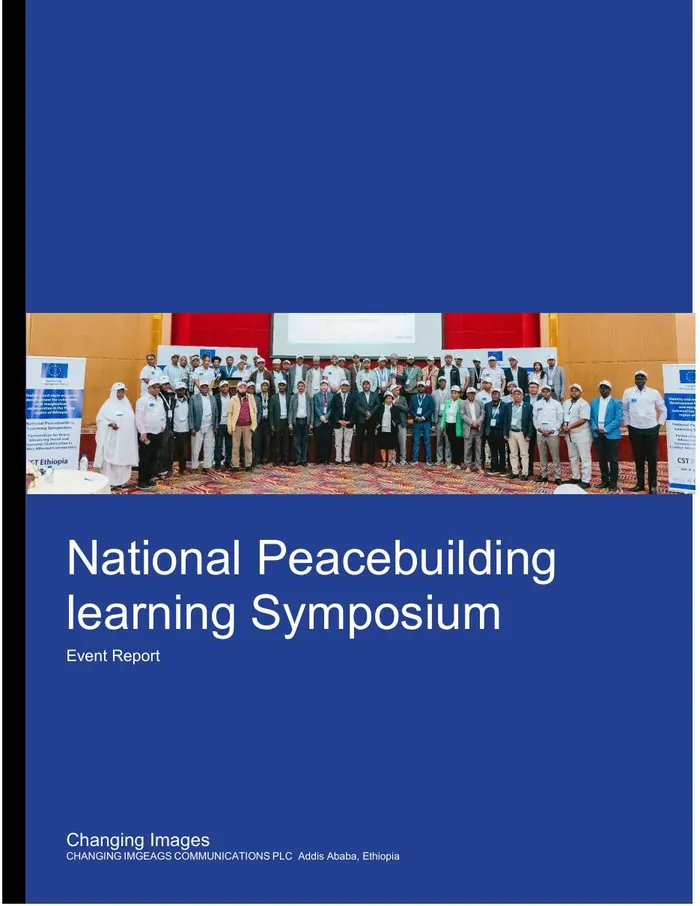
A client recently gave us a very clear instruction: not too much content. People do not have the time anymore.
That is not an argument for shallow reporting. It is an argument for stronger judgement.
Event reports often become long because the writer tries to prove that everything was captured. Every speech is summarised, every presentation is described and every session is recorded in chronological order. The result may be accurate and still be difficult to use. The reader must work too hard to find the decision, the main takeaway or the action that concerns them.
A report should not make people attend the event a second time on paper. It should help them understand what mattered and act on it.
Start with the report's job
Different readers need different things from the same event.
A senior leader may need the decisions, risks and next steps. A programme team may need evidence for the next engagement. Stakeholders may need an accurate record of what was agreed and what remains open. Communications colleagues may need verified messages, themes, quotes and stories. A knowledge team may need insight that can be connected to earlier work and reused in future products.
Trying to serve all of them with one uninterrupted narrative usually produces a document that serves none of them well. The report needs layers so that each reader can reach the right depth quickly.
The five layers of a useful event report
The first layer is a short executive summary. It should explain why the event took place, who needed to be involved, what became clear, what was decided and what needs attention next. It is not an introduction to the full report; it is a usable product in its own right.
The second layer is the main decisions and takeaways. These should be written in direct language and separated from general discussion. “Participants discussed the importance of collaboration” is not a decision. “The three institutions agreed to develop a joint workplan by September” is.
The third layer is an action matrix. Every genuine action should identify an owner, an expected time frame and any important dependency. If no person or institution accepted responsibility, the report should not quietly convert an aspiration into a commitment.
The fourth layer is participant insight and unresolved questions. This is where the report preserves important differences, implementation concerns, questions that could not be answered and perspectives that may otherwise disappear after the event.
The fifth layer is proceedings and supporting material. Session summaries, speaker contributions, presentations, participant lists and other records may be necessary for institutional memory or contractual requirements. They should support the useful layers, not bury them.
Capture must begin before the event
A report writer cannot reliably reconstruct decisions from scattered notes at the end of a two-day programme.
Documentation should be designed alongside the agenda. The team needs to decide what evidence each session should produce, who will capture it and in what format. A presentation may require key messages and cited data. A working group may require recommendations and points of disagreement. A decision session may require exact wording, responsible institutions and deadlines.
This preparation also improves facilitation. When the expected output is explicit, the facilitator can frame the session properly, ask sharper questions and confirm the result before participants leave. Reporting then becomes part of the process rather than an administrative exercise performed after it.
Do not confuse discussion, synthesis and agreement
One of the most serious reporting errors is to present a facilitator's synthesis as if every participant agreed with it.
A strong report distinguishes what a speaker stated, what participants raised, what the facilitation team observed, what the group agreed and what the organizers later recommended. These may all be useful, but they do not carry the same authority.
The same discipline applies to quotes and numbers. Quotes should be used sparingly and attributed only when the wording and speaker are verified. Statistics should be traced to a presentation or source. Missing information should remain missing rather than being completed through confident guesswork.
Accuracy is not only about avoiding mistakes. It is about protecting the legitimacy of the event and the relationships among the people who contributed.
Short does not mean superficial
The best way to shorten a report is not to shrink the font or remove context. It is to eliminate repetition and impose a hierarchy on the material.
A concise report can still explain the purpose, represent different voices, preserve important evidence and make follow-up visible. It simply refuses to give equal space to ceremonial remarks, repeated statements and consequential decisions.
Where detailed proceedings are required, they can sit behind a clear executive layer or in annexes. Readers who need the full record can access it. Readers responsible for action should not have to search through twenty pages to discover what they own.
A report should create future value
Useful documentation becomes an asset when planning the next engagement. It allows organizers to see what was already discussed, which questions remain unresolved and whether earlier commitments were completed. The next meeting can begin from the previous result instead of repeating the previous conversation.
It can also support communication and knowledge work. A well-structured evidence base can generate accurate summaries, social content, learning notes, briefing material and future programme design. This reuse should remain faithful to what happened; the goal is to extend the value of the event, not exaggerate its significance.
This is where a concise report can be more valuable than a comprehensive but unread record. Information creates value only when people can find, trust and use it.
The absent-reader test
Before approving an event report, give it to someone who did not attend and ask five questions.
Can they understand why the event was necessary? Can they identify the main insights or decisions? Can they distinguish agreement from discussion? Can they see who is expected to do what next? Can they use the document without asking the writer to explain it?
If the answer is no, the report may have documented the event without transferring its value.
The objective is not to record more. It is to make what matters easier to carry forward.