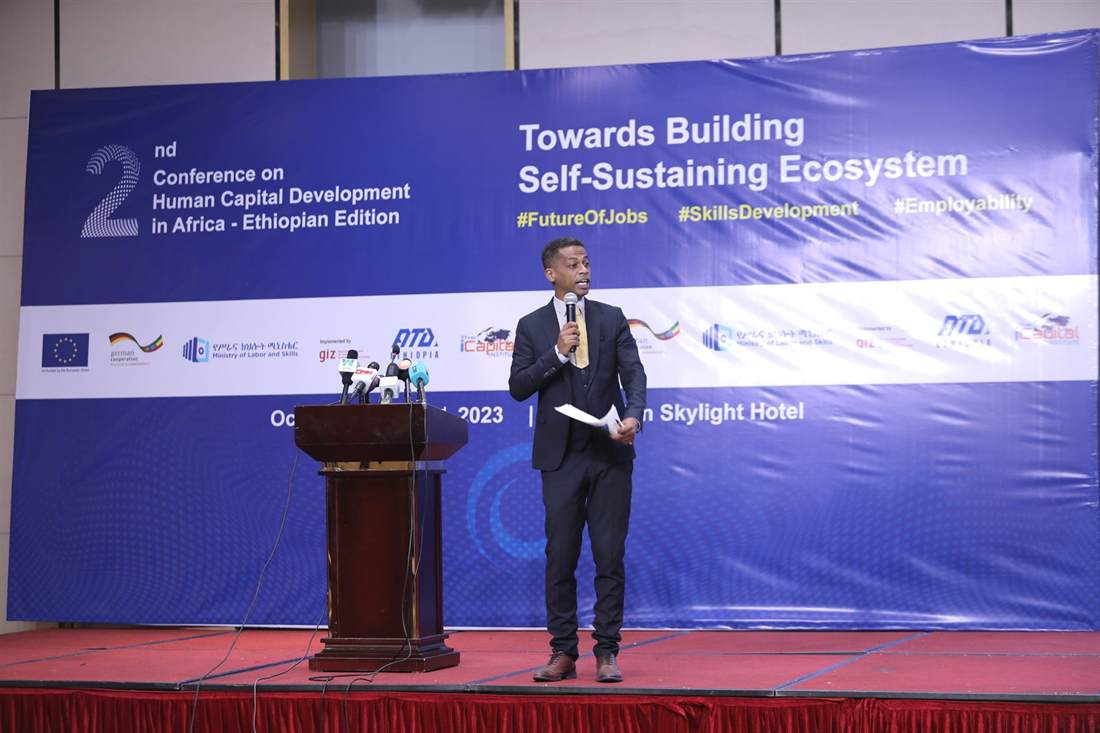
I sometimes introduce myself as the clapping coach.
It is a light moment, but there is truth behind it. Clapping can acknowledge a speaker, raise the energy in a room, regain attention, mark a transition or become part of a quick energizer. I may even joke that I am helping participants live healthier lives while we applaud.
But if an MC's contribution is reduced to asking for applause, the organizers are leaving a great deal of value unused.
The terms MC, moderator and facilitator are often used as if they mean the same thing. In practice, they protect different parts of an event. The confusion usually becomes visible when the programme starts: the MC is expected to repair an impossible agenda, the moderator discovers five panellists waiting for a 45-minute session, or the facilitator is introduced after every important design decision has already been made.
The MC protects the event's flow
The MC is responsible for the experience of the whole programme. They welcome participants, frame the purpose, introduce speakers, manage transitions, maintain energy, protect time, coordinate protocol and help the audience understand where the event is going.
A strong MC does more than read the agenda. They listen to the room. They notice when energy has dropped, when a transition needs context, when the audience is confused, or when a delay has created consequences for the rest of the day. They keep the event coherent without exposing backstage disorder.
This role is especially important at conferences, launches, ceremonies, summits and high-level events where timing, protocol and audience confidence matter. It is a demanding form of live judgement, even when the script looks simple on paper.
The moderator protects the quality of a session
A moderator usually has a narrower but deeper responsibility. Their job is to make a panel, interview or dialogue useful.
They clarify the session's purpose, prepare questions, understand the speakers' perspectives, manage airtime, probe beyond prepared statements, connect contributions, integrate audience questions and close with a meaningful synthesis.
A moderator is not there to ask every question on a list. They are there to protect the conversation. That may require interrupting repetition respectfully, following an unexpected but important point, bringing in a quieter panellist, or moving the discussion toward the question the session was created to answer.
The facilitator protects the process and its outcome
A facilitator works with the architecture of participation. They help clarify the problem, identify the required stakeholders, define the outcome, design the sequence, select appropriate methods, guide interaction, surface differences and support participants to reach decisions or commitments they can legitimately own.
The facilitator does not decide the substance for the group. Their authority is over the quality of the process. They ask whether each session has a purpose, whether the method fits that purpose, whether the people with knowledge and authority are present, and whether the result will be captured and used.
This is why facilitation begins before participants enter the room. The visible work during the event rests on quieter work beforehand: understanding the problem, testing assumptions, examining timing, anticipating power dynamics and planning how evidence and decisions will be captured.
Why an MC benefits from a facilitator's briefing
Almost every MC assignment can be strengthened when the MC is onboarded with a facilitator's level of understanding.
Ideally, the professional should have at least one proper design meeting, access to the objectives, participant profile and draft agenda, and permission to recommend changes. This does not mean the MC takes ownership of every planning decision. It means the person guiding the room understands why the event exists and can identify risks before those risks reach the stage.
The benefit to organizers is practical. An experienced professional can reduce their live coordination load, identify contradictions in the programme and prepare for late arrivals, reordered speakers, shortened sessions or technical problems. Early involvement also creates trust, which matters when the MC must make a judgement in seconds.
In many assignments, I find myself making small decisions on the spot because the agenda and the room are no longer aligned. When organizers trust the judgement of the person on stage, those decisions can protect the event. But it is always better to prevent an avoidable problem during design than to improvise around it in public.
The 45-minute panel problem
Consider a 45-minute panel with five speakers and audience questions.
After the moderator frames the session and introduces the panellists, perhaps 40 minutes remain. If each panellist receives five minutes for an opening response, 25 minutes are gone. A second round of only two minutes each uses another ten. That leaves roughly five minutes for audience questions, answers, follow-up and closing—assuming nobody exceeds their time and no transition is lost.
The mathematics does not work. The moderator will either silence the audience, cut off panellists, abandon the synthesis or allow the session to make every later item late.
This is not a failure of stage management. It is a design failure. A professional involved early can offer real choices: reduce the number of panellists, narrow the questions, extend the session, collect audience questions in advance, replace opening statements with a faster format, or accept that the session is a showcase rather than a dialogue.
Can one person perform all three roles?
Yes, sometimes. A skilled professional may facilitate the design, MC the overall programme and moderate selected sessions. Combining roles can give the event a consistent voice and reduce handover problems.
But combination has limits. A large or sensitive event may need separate attention to protocol, stage flow, substantive moderation, group process, documentation and technical coordination. One person cannot lead the stage, moderate digital input, brief the next speakers and solve an organizer's problem at the same moment.
Separate roles are especially valuable when there are multiple rooms, complex stakeholder dynamics, several languages, high-level protocol, simultaneous digital engagement or demanding documentation requirements. The question is not how many professionals can be removed from the budget. It is which responsibilities must be protected for the event to succeed.
Ask what problem the role must solve
Before hiring, organizers should ask: Do we mainly need flow, protocol and energy across the programme? Do we need sharper panel conversations? Do we need participants to work through an issue and produce an outcome? Do we need someone to redesign the agenda before delivery? Do several of these needs exist at the same time?
The title matters less than the mandate. A person called an MC may be asked to facilitate. A person called a facilitator may receive no authority to change a weak process. A moderator may be handed questions five minutes before the panel and still be expected to create insight.
The best results come when the role, authority, preparation time and expected outcome are aligned. Hire for the work the room needs—not for the label that usually appears on the programme.