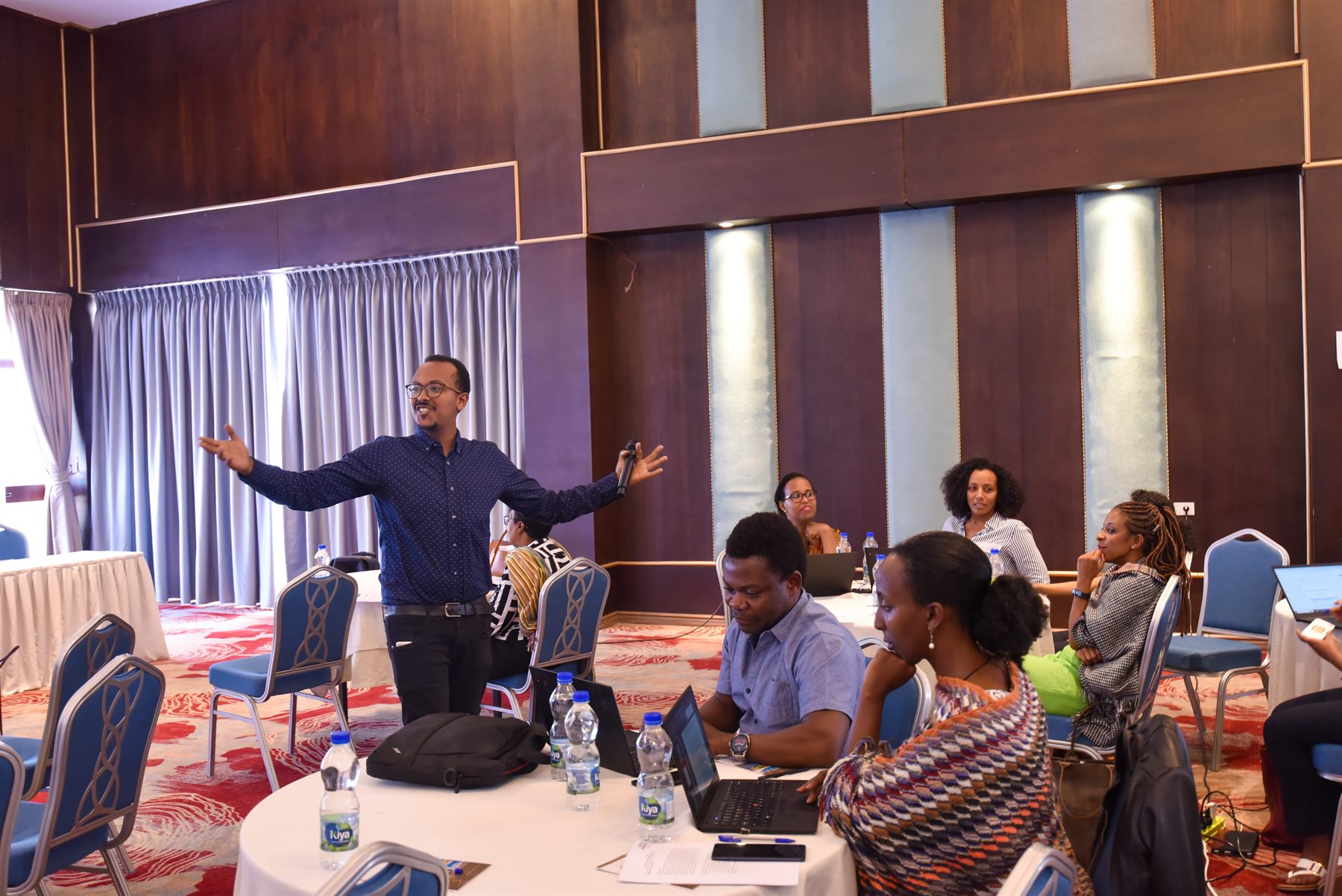
At a recent event, three participants from West Africa had limited confidence in English. Their language needs became much more visible after the programme had begun.
Because I speak French, I could sit near them during presentations and group discussions, clarify what was happening, listen to their views and help them connect with the wider room. The organizers were pleasantly surprised, and the participants' experience improved.
It was a useful reminder, but it should not become a comforting story about a bilingual facilitator saving the day. The stronger lesson is that language should have been part of the event architecture from the beginning.
A multilingual meeting is not simply a normal meeting with translation added. Language affects who understands quickly, who speaks confidently, who is interrupted by delay, whose ideas are summarised, and whose words survive into the report.
Language is part of participation and power
People can understand a second language and still be unable to participate in it with the same precision, confidence or speed they have in their first language.
In a fast panel or senior-level discussion, that difference matters. By the time a participant has formulated a contribution, the moderator may have moved on. A person may avoid challenging an idea because they cannot find the right words quickly enough. Technical nuance may be lost, humour may not travel, and confident speakers may appear more knowledgeable simply because they are operating in the dominant language.
Language therefore affects more than accessibility. It affects influence. If only some participants can engage fully, the meeting may look inclusive while still giving unequal weight to the people in the room.
Interpretation and facilitation solve different problems
Professional interpretation helps participants understand what is being said across languages. Facilitation helps the room use that understanding to participate, think, decide or commit.
The interpreter must preserve meaning accurately. The facilitator must design how people enter the conversation, how much time they have, how questions move across languages and how contributions are connected. A bilingual MC or facilitator can bridge gaps and curate the flow, but should not casually replace a professional interpreter when the volume, technical complexity or sensitivity of the content requires one.
The distinction protects everyone. Asking one person to host the stage, interpret every contribution, monitor time, support participants and synthesise the discussion may create a visible bilingual programme but an overloaded and unreliable process.
A bilingual stage requires curation
If organizers decide that the main stage will operate in two or more languages, the programme must acknowledge the time cost.
Consecutive interpretation can nearly double some contributions. Repeating every greeting, biography and ceremonial phrase in full may consume the time intended for discussion. If nobody curates repetition, the event will run late or participant engagement will be sacrificed to protect the closing time.
The facilitator has a responsibility to decide what must be fully interpreted, what can be summarised, what can be displayed in writing and what can be communicated before the session. Purpose, instructions, decisions, sensitive contributions and participation opportunities deserve protection. Repeated acknowledgements and long biographies usually do not deserve equal time.
This is not about making one language secondary. It is about designing equitable access without pretending time is unlimited.
Design language before invitations are sent
The planning team should map language needs alongside stakeholder needs. Which languages allow invited participants to contribute meaningfully? Which sessions are technical or politically sensitive? Is simultaneous or consecutive interpretation appropriate? Are interpreters familiar with the terminology? Will speakers submit presentations early enough for preparation?
Registration should invite participants to state their language and accessibility requirements. Invitations should explain what support will be available. The agenda should show where interpretation is provided, and the room setup should allow participants to see, hear and join without embarrassment.
The answers may change the budget, venue, technology, staffing and timing. Discovering them on the morning of the event leaves very few good options.
Group work needs its own language design
Interpretation at the main stage does not automatically make small-group work inclusive.
Organizers may create language-based groups, mixed groups with bilingual facilitators, or a combination depending on the purpose. Written prompts can be provided in the relevant languages. Instructions should be demonstrated, not only read quickly. Rapporteurs need a method for bringing contributions back into the shared room without stripping away important nuance.
Language-based groups can increase confidence and depth, but they may reduce cross-language exchange. Mixed groups can build connection, but they may place an unfair burden on bilingual participants or slow the discussion. The right choice depends on whether the session is designed for exploration, relationship building, technical work, prioritisation or decision-making.
There is no universal multilingual method. There is only a method that fits the session's why.
Protect multilingual contributions in the report
A participant has not been fully heard if their contribution disappears during synthesis.
Documentation teams should record the source language of important contributions, verify translated quotations and distinguish direct interpretation from later synthesis. Key decisions and action points should be confirmed in the languages needed by those responsible for them. Where a full multilingual report is not realistic, a bilingual executive summary or translated decision note may create more practical value than translating every page.
The report should also acknowledge the limits of the process. If some sessions lacked interpretation or participation was uneven across language groups, that matters when interpreting the results. Inclusion should not be claimed more strongly than the evidence allows.
The multilingual design test
Before the event, organizers should ask: Can every essential stakeholder understand the purpose and instructions? Can they contribute with enough confidence and time? Is interpretation staffed and prepared for the content? Does the agenda include the real time required? Will ideas from every language reach the shared discussion and final record?
A bilingual facilitator can create valuable human connection. I have seen what changes when a participant can turn to someone, ask a question in French and feel immediately included. But goodwill and improvisation should be the safety net, not the language strategy.
A multilingual meeting succeeds when language is designed into participation, timing, decision-making and documentation from the start. Translation transfers words. Good multilingual facilitation protects meaning, voice and influence.